
Referral Commission and Act 500: What Merchants Should Know
What Is This?
Recurring Referral Commission lets your members earn store credit when the friends they invite make a purchase. Some business owners worry this looks like direct selling under Malaysia's Direct Sales and Anti-Pyramid Scheme Act 1993 (Act 500). This guide explains what the feature does, why a normal setup is a loyalty program, and when to get written advice.
Important
This is general information, not legal advice. Pixalink provides the software. You choose the settings, the wording and the terms, and you are responsible for following the law. If you are unsure, get written advice from KPDN or a Malaysian lawyer before you launch.
How It Works
A member invites a friend. The friend signs up and buys from you directly. After each purchase that meets your minimum spend, the member earns credits worth a percentage of that purchase. The credits land in the member's wallet.
Everything sits in Admin Panel → Loyalty Program → Referral Configurations. Click Edit on your referral setup.
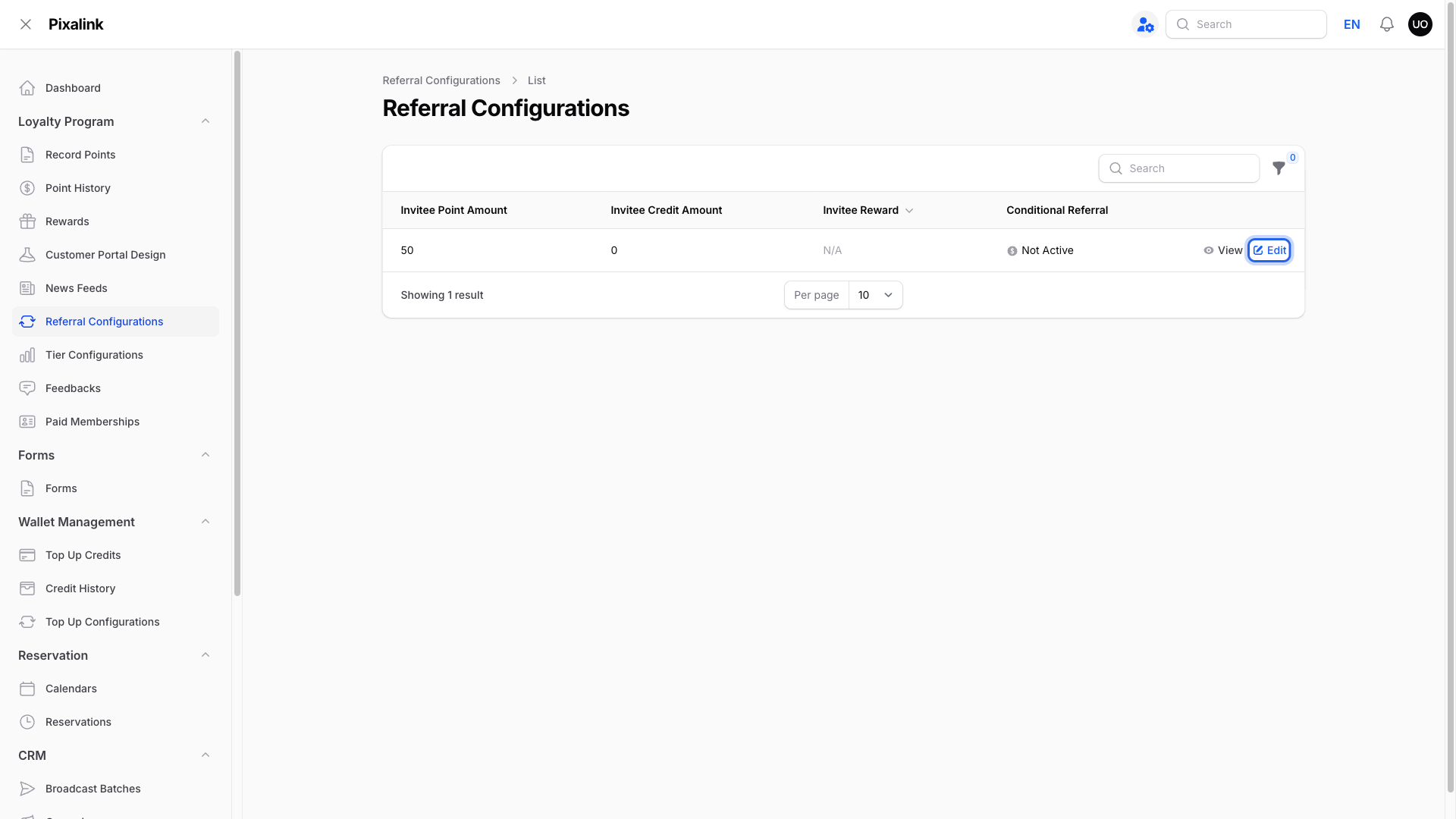
Open the Configurations tab.
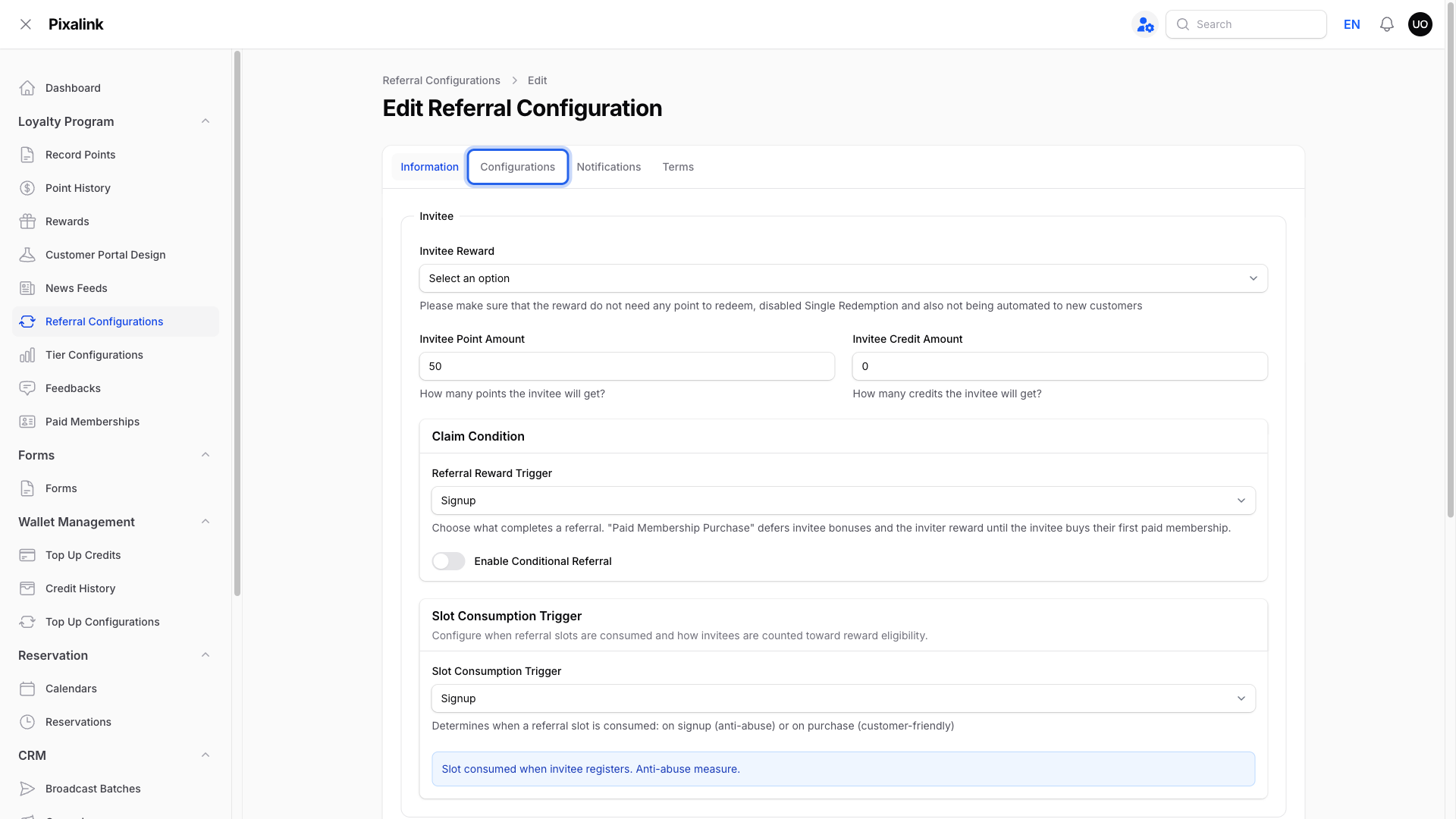
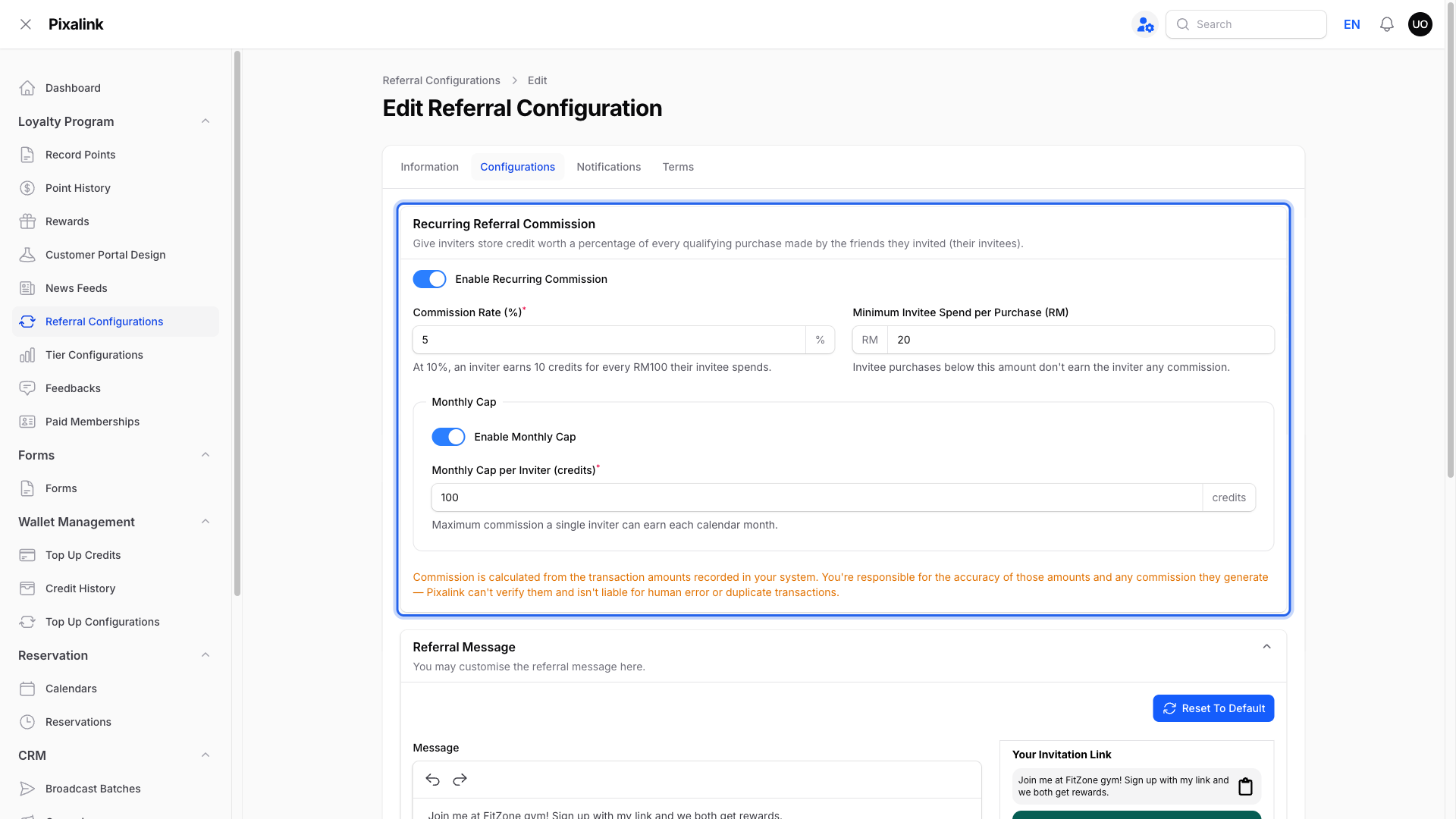
The Recurring Referral Commission section holds four settings: Enable Recurring Commission, Commission Rate (%), Minimum Invitee Spend per Purchase (RM) and an optional Monthly Cap per Inviter (credits).
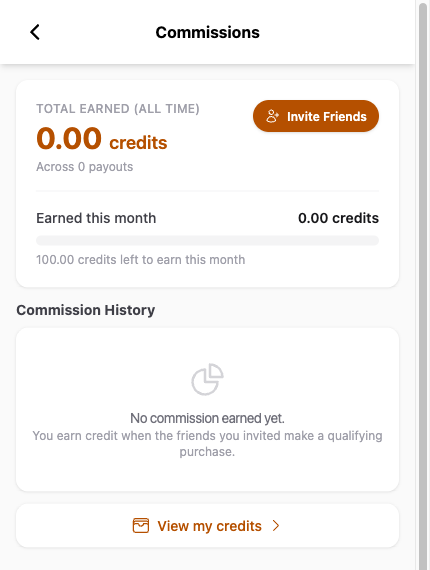
Members follow their earnings on the Commissions page in your customer portal.
Why this is normally a loyalty program, not direct selling:
| Your program | Direct selling or pyramid scheme |
|---|---|
| Members are customers. They do not sell for you or collect payment. | Agents or distributors sell on your behalf. |
| Friends buy straight from your outlet or online store. | Sales pass through the agent. |
| One level only: the inviter and the friends they invited. | Downlines, tiers or "levels" that pay from recruitment. |
| Credits stay in the wallet. No cash, no transfer, no withdrawal. | Cash payouts, joining fees or starter packages. |
Real-Life Example
Priya runs FitZone gym in Cheras. Members keep asking if they get anything for bringing friends. She turns on Recurring Referral Commission at 5%, sets a minimum spend of RM20 and a monthly cap of 100 credits.
Her member Farah invites Ravi. Ravi joins and pays RM120 for a month. Farah gets 6 credits in her wallet. Ravi renews every month, so Farah keeps earning until she hits her 100-credit cap. Farah spends the credits on protein shakes at the gym bar. No cash changes hands and Priya's program stays a simple loyalty perk.
Good to Know
- Keep members as customers. Never call them agents, distributors or partners.
- Keep it one level. The ten referral slots are milestones for one member's direct friends, not ten "levels".
- Keep credits in the wallet. Never promise cash, transfers or "passive income".
- Use plain words in your referral message and terms: "invite friends and earn credits", not "shareholder plan" or "build your downline".
- Set a sensible rate, minimum spend and monthly cap. A cap keeps costs predictable.
- Refunds and voids that reach Pixalink usually reverse the related commission. Check your credit history if something looks off.
- Get written advice from KPDN or a lawyer if you plan to pay cash, add a second level, charge a joining fee, or make members sell for you. A licence never makes a pyramid scheme legal.
Need Help?
Contact Pixalink support and we will walk through your referral setup with you.