
Urgency & Collections
Promote a Sell-Out Product Without Cutting Its Price
How can he promote bread he cannot bake more of, without sacrificing the margin he already earns?
A worked example
- RM7
- Contribution per incremental action
- 20
- Break-even actions
- 30
- Minimum target
additional baskets
additional baskets, rounded up
At a glance
The business problem
A sold-out product can still leave customer value unrealised. Grace leaves without a loaf, coffee or pastries, while Amirul has no reason to expect her back.
At an assumed RM18 per loaf, a RM2 discount across 60 existing sales gives away RM120 daily. The useful opportunity is extra spending around a planned collection, after accounting for displaced walk-in purchases.
Why the usual promotion falls short
A deeper discount does not create oven capacity. A very short collection deadline could simply make Grace miss out again.
Scarcity lifts purchase intention for every product type; which cue works best is what varies — popularity cues suit utilitarian goods, limited-quantity cues suit experiences and treats — Barton, Zlatevska & Oppewal (2022), Journal of Retailing 98(4). For Amirul, a genuine quantity limit fits the offer. It gives customers a reason to claim while allowing time to collect; research on intention does not guarantee purchases or profit.
What you set up in Pixalink
Opening scenario
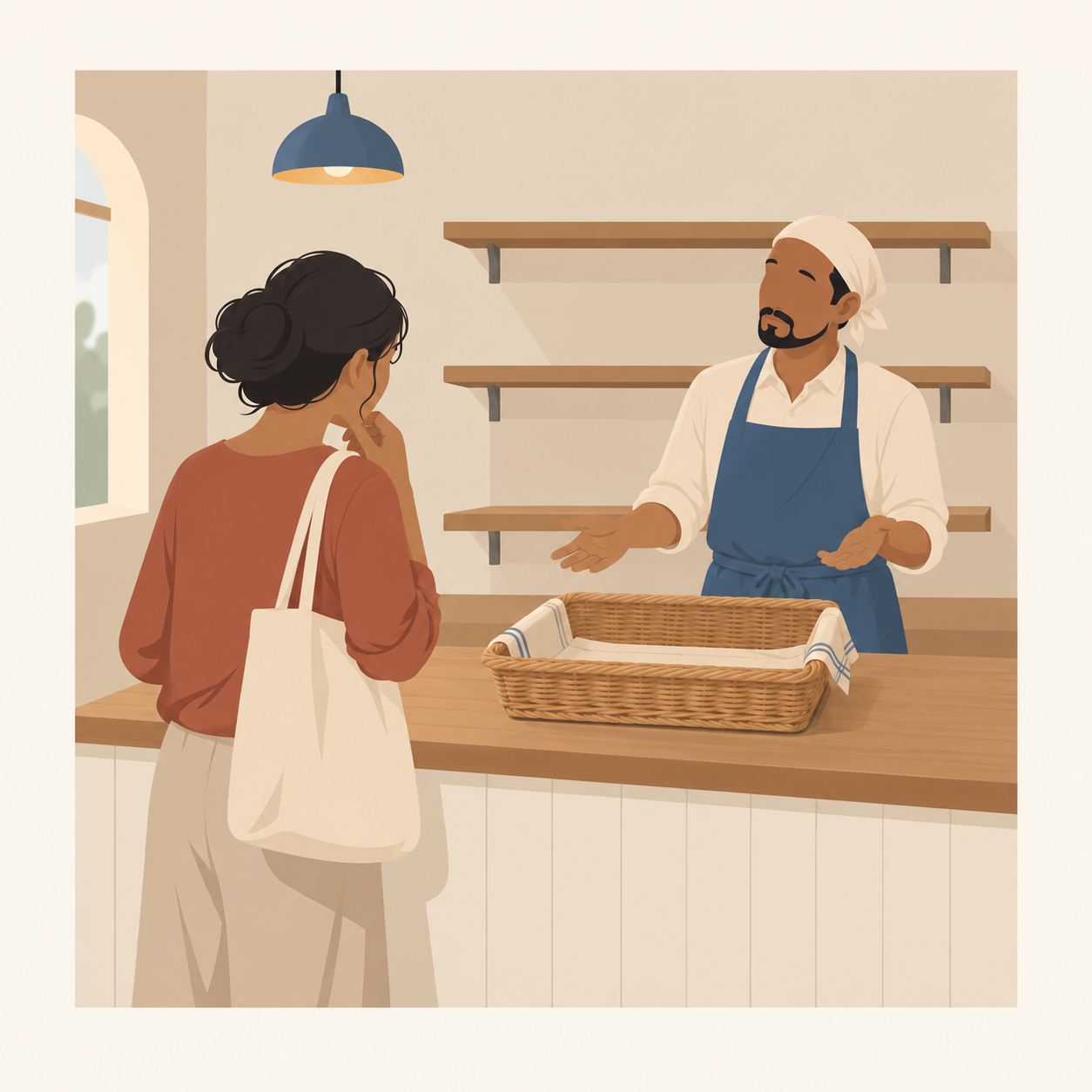
By noon, Amirul’s Kuala Lumpur artisan bakery has sold all 60 sourdough loaves. Grace arrives to find the bread basket empty again; she has been meaning to try a loaf for months. Amirul considers a discount, then hesitates: selling the same bread for less would not help either of them.
Amirul, Grace and this bakery are fictional, and all figures in this article are illustrative. His problem is not a lack of demand, but giving someone like Grace a dependable reason to visit. How can he promote bread he cannot bake more of, without sacrificing the margin he already earns?
The recipe
The campaign recipe
Use a limited-quantity voucher drop to offer access at the normal price. The starting assumptions below keep coffee and pastries optional.
| Recipe element | Recommended starting point |
|---|---|
| Suitable industries | Artisan bakeries, limited-batch food businesses and capacity-limited experiences |
| Primary goal | Earn additional contribution around planned collections |
| Customer segment | Interested customers like Grace who have previously missed the sourdough |
| Offer | Claim a voucher for one reserved loaf; pay its normal RM18 price at collection; no discount or free gift |
| Validity | Claim within a 48-hour window; collect within 14 days from claim |
| Minimum spend | RM18 for the loaf; no extra basket requirement; staff enforce payment and any minimum-spend terms |
| Quantity or budget limit | 100 vouchers across the whole drop; RM140 operating budget; staff allocate up to 10 collection loaves daily from existing production |
| Main success metric | Incremental contribution after campaign operating cost |
Claiming gives the right to arrange a loaf collection with staff, not a free loaf. Reward cost is RM0 because there is no giveaway; baking costs remain part of the ordinary loaf sale.
The message your customer receives
This message is fictional, like the merchant and customer. All figures are illustrative.
From Amirul’s bakery via WhatsApp
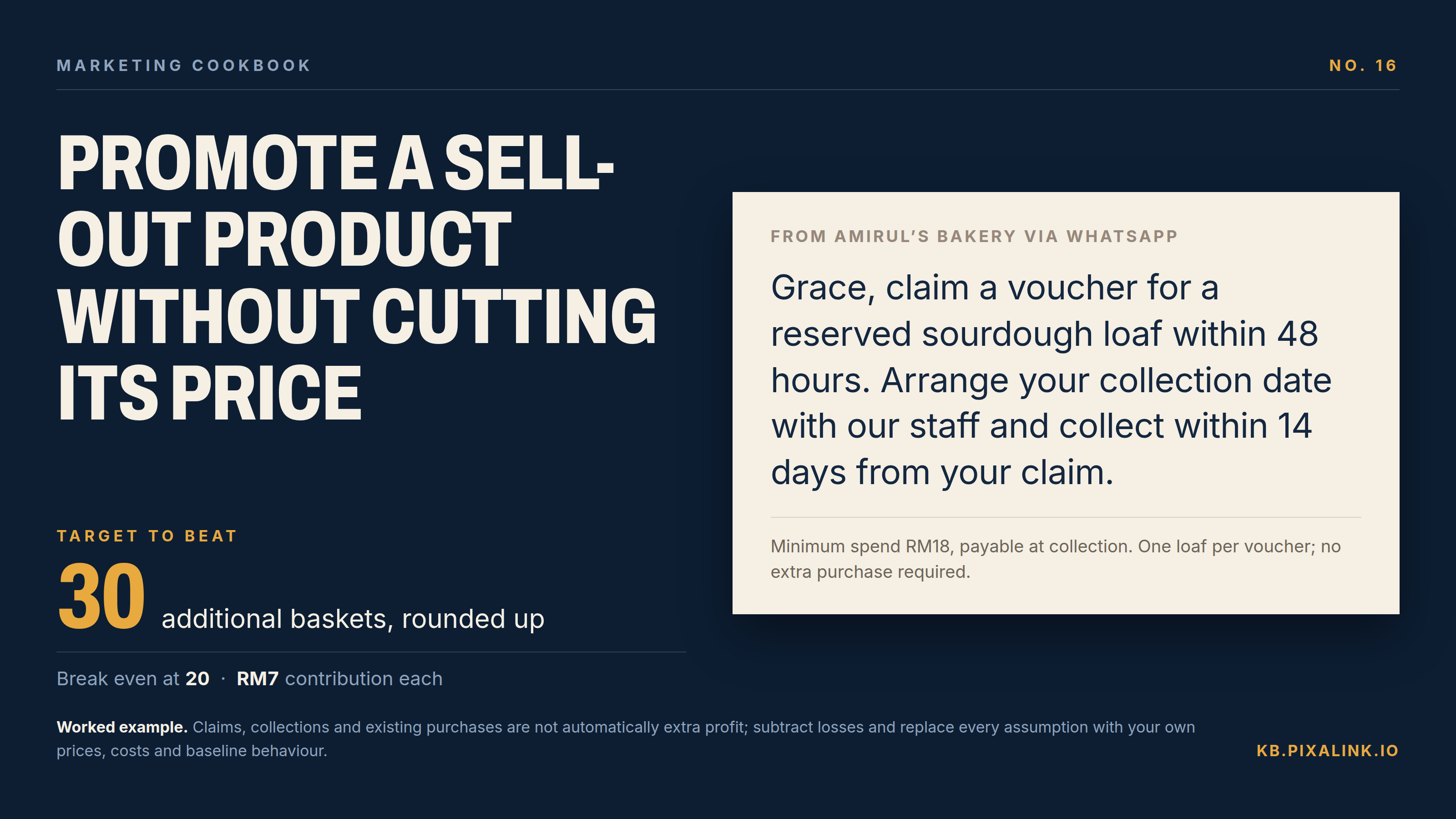
Grace, claim a voucher for a reserved sourdough loaf within 48 hours. Arrange your collection date with our staff and collect within 14 days from your claim.
Minimum spend RM18, payable at collection. One loaf per voucher; no extra purchase required.
The journey
Follow the customer
- See the offer. Grace sees reserved sourdough capped at 100 vouchers. The offer states the price and staff-arranged collection.
- Claim a loaf. She claims one because she has missed out before. The published quantity reflects a real allocation.
- Choose her visit. Grace has 14 days from claim to collect. She agrees a collection date with staff instead of making a panic trip.
- Collect and explore. Grace arrives on Thursday, pays for her loaf and buys coffee and pastries alongside it. Staff invite her to consider another ordinary visit, without promising another reward.
flowchart LR
    A["See the real cap"] --> B["Claim a loaf"]
    B --> C["Agree collection within validity"]
    C --> D["Collect and choose extras"]
Use case: how the merchant applies it
Amirul allocates 100 loaves from future production, not from one morning’s 60. He opens claiming for 48 hours and offers 14 days from each claim to collect at RM18, with no compulsory extras.
Staff agree dates before customers travel, allowing up to 10 collection loaves a day within the existing bake. Amirul must have enough trading days and capacity throughout every claimant’s validity period; he cannot promise that all 100 can arrive together.
Grace’s illustrative Thursday basket is RM30: RM18 bread plus RM12 coffee and pastries. After collection, Amirul records the extras and any displaced walk-in spending, then compares the test with ordinary trading.
How the platform helps
How Pixalink supports the strategy
Pixalink enforces total availability, claim state, visibility window and expiry. Amirul enforces minimum spend and honours the public cap, including keeping promised loaves out of walk-in stock.
Automatic loaf reservations, collection-slot allocation and a live stock countdown are not supported by the verified scope of this recipe. Staff handle collection planning, and the announcement states the total allocation without pretending it is a live remaining-stock counter.
Claim time and use time are separate settings. Check the final expiry before launch: a reward End Date can shorten the promised 14 days, so closing visibility must not accidentally end voucher use.
Configure this in Pixalink
Use What Are Rewards and How to Create Them for the reward setup. Check What Voucher Expiry Dates Mean in Pixalink before setting the collection promise.
The economics
ROI taste test
Count an incremental action as an additional RM12 coffee-and-pastry basket beyond normal spending, with RM5 variable fulfilment cost and RM0 reward cost. Grace’s RM18 loaf replaces a sale Amirul already expected, so exclude it from incremental cash.
Contribution per incremental action = cash collected - variable fulfilment cost - reward cost. Contribution per incremental action = RM12 - RM5 - RM0 = RM7.
Break-even actions = campaign operating cost / contribution per incremental action. Break-even actions = RM140 / RM7 = 20 additional baskets.
Minimum target = break-even actions × 1.5, rounded up. Minimum target = 20 × 1.5 = 30 additional baskets, rounded up.
At that target, RM210 contribution less RM140 operating cost leaves RM70, before any unexpected waste or displaced contribution. Claims, collections and existing purchases are not automatically extra profit; subtract losses and replace every assumption with your own prices, costs and baseline behaviour.
Measure it
What to watch
- Incremental contribution: extra basket contribution versus baseline, less operating cost, waste and displaced sales.
- Additional basket count: extra coffee-and-pastry baskets attributable to the drop, against the 30-basket target.
- Collection fulfilment rate: completed collections divided by claims, checked against expiry.
Common mistake: celebrating 100 claims as 100 new sales when the loaves already sell out. Amirul should judge Grace’s extra spending against normal trade.
Safeguard: maintain one staff-controlled allocation ledger covering claims, agreed dates and collections. Honour every valid promise within capacity, reconcile it daily and never quietly increase the advertised cap.
Keep when at least 30 additional baskets, positive net contribution and the safeguard hold. Improve a promising result by changing one assumption in a separately capped test; stop this version if it misses the target, contribution is non-positive or the safeguard fails.
Your first test
Try this first
- Define Grace’s missed-out segment and record a comparable normal-trading baseline.
- Cap exposure at 100 vouchers and RM140 operating cost; allocate collection capacity first.
- Test one RM18 offer, a 48-hour claim window and 14-day validity; observe through the last voucher’s expiry.
- Record basket costs, displaced sales and waste alongside the daily allocation-ledger safeguard.
- Apply the keep/improve/stop rule before offering another drop; change only one assumption if retesting.
Questions
Frequently asked questions
Does claiming mean the loaf is free?
No: the offer reserves access to a loaf priced at RM18. State payment and collection terms before Grace claims.
Can claiming close before collection ends?
Yes, claim time and use time are separate. Check that the reward End Date does not truncate the promised validity.
What if everyone wants Thursday?
The voucher cap does not allocate daily collection slots. Staff must agree feasible dates within validity before anyone travels.
Does an unused voucher become fresh availability?
Do not assume automatic replenishment or extend the public cap. Reconcile unused claims manually and keep any later drop separate.
Share this recipe
A card you can post
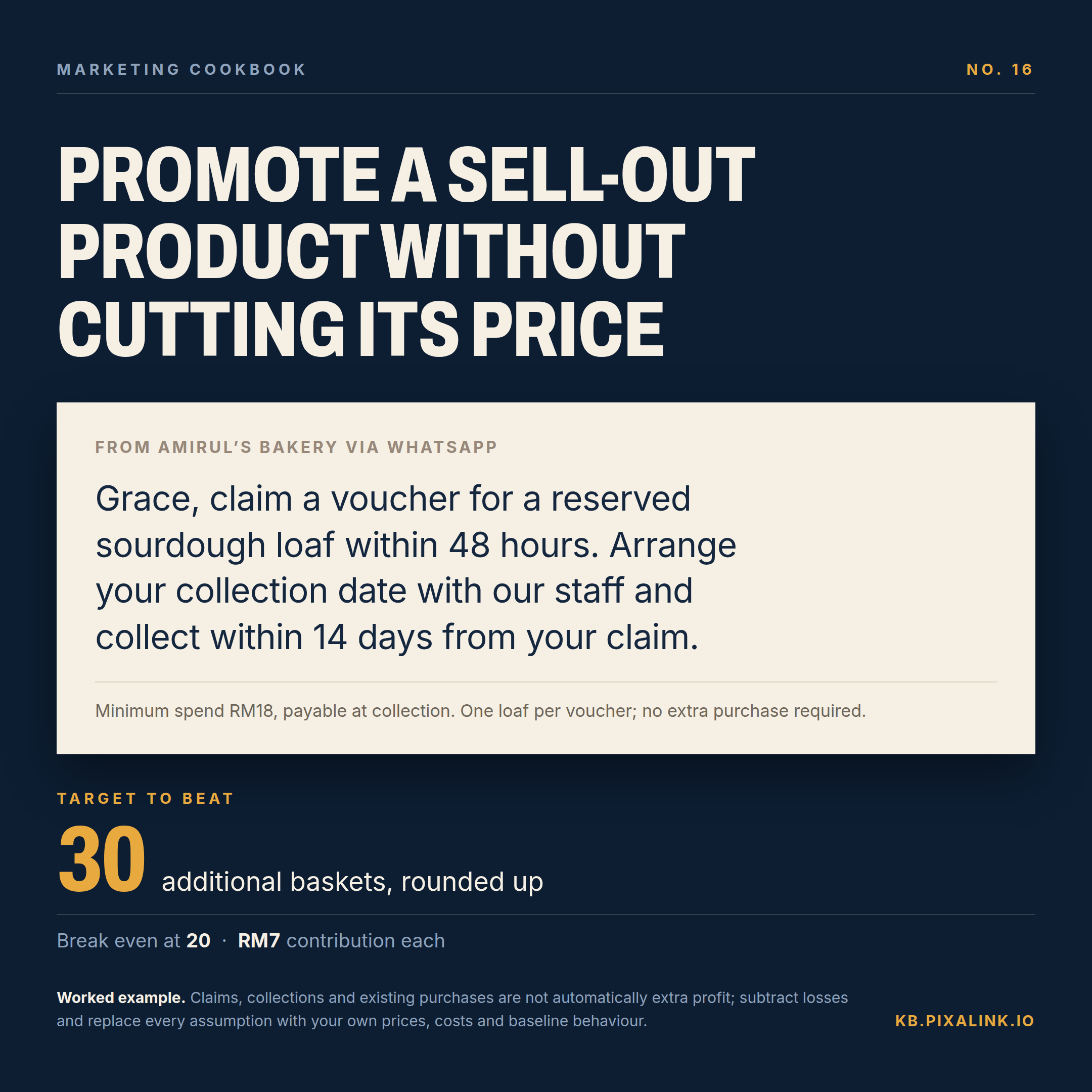
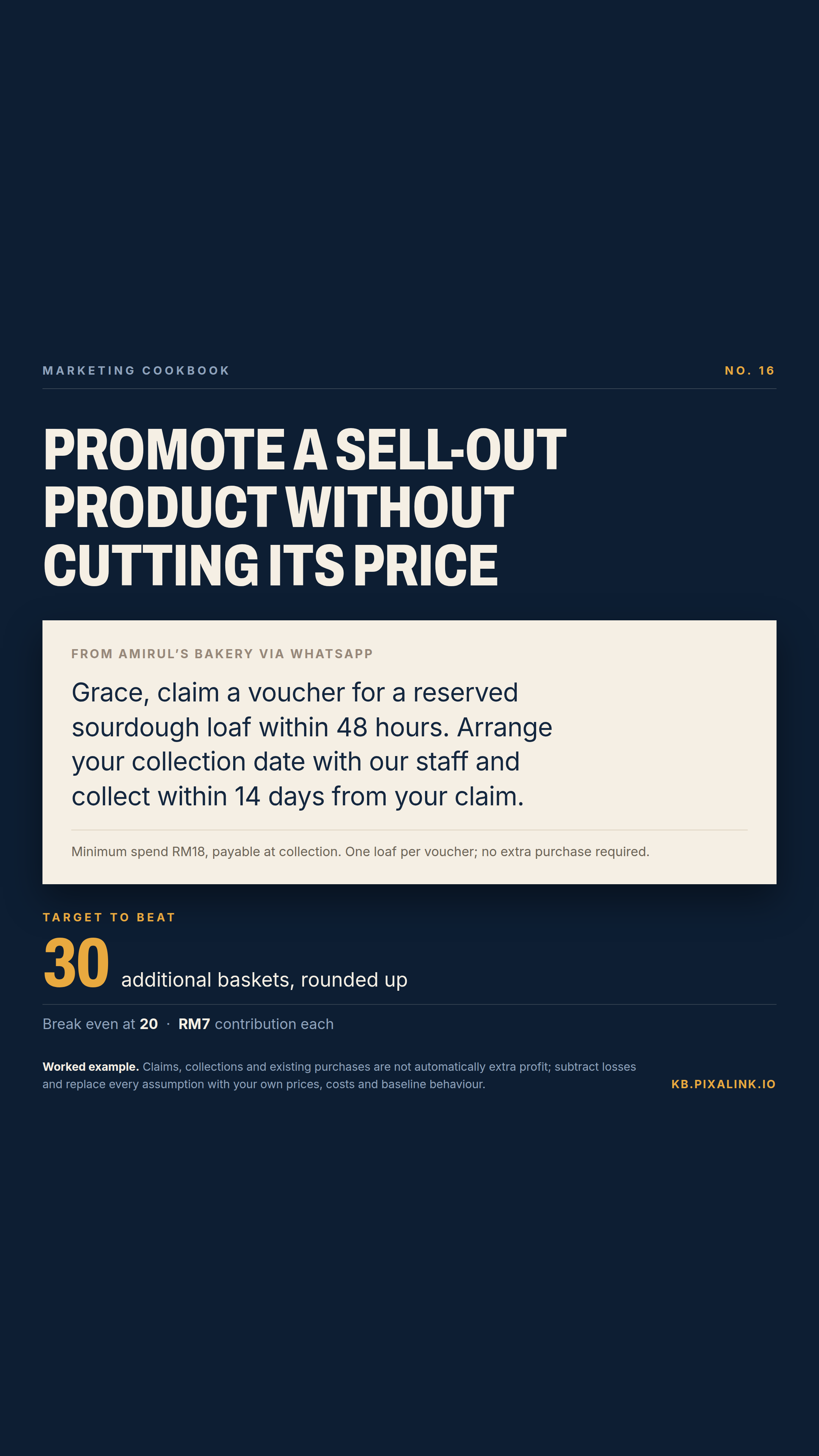
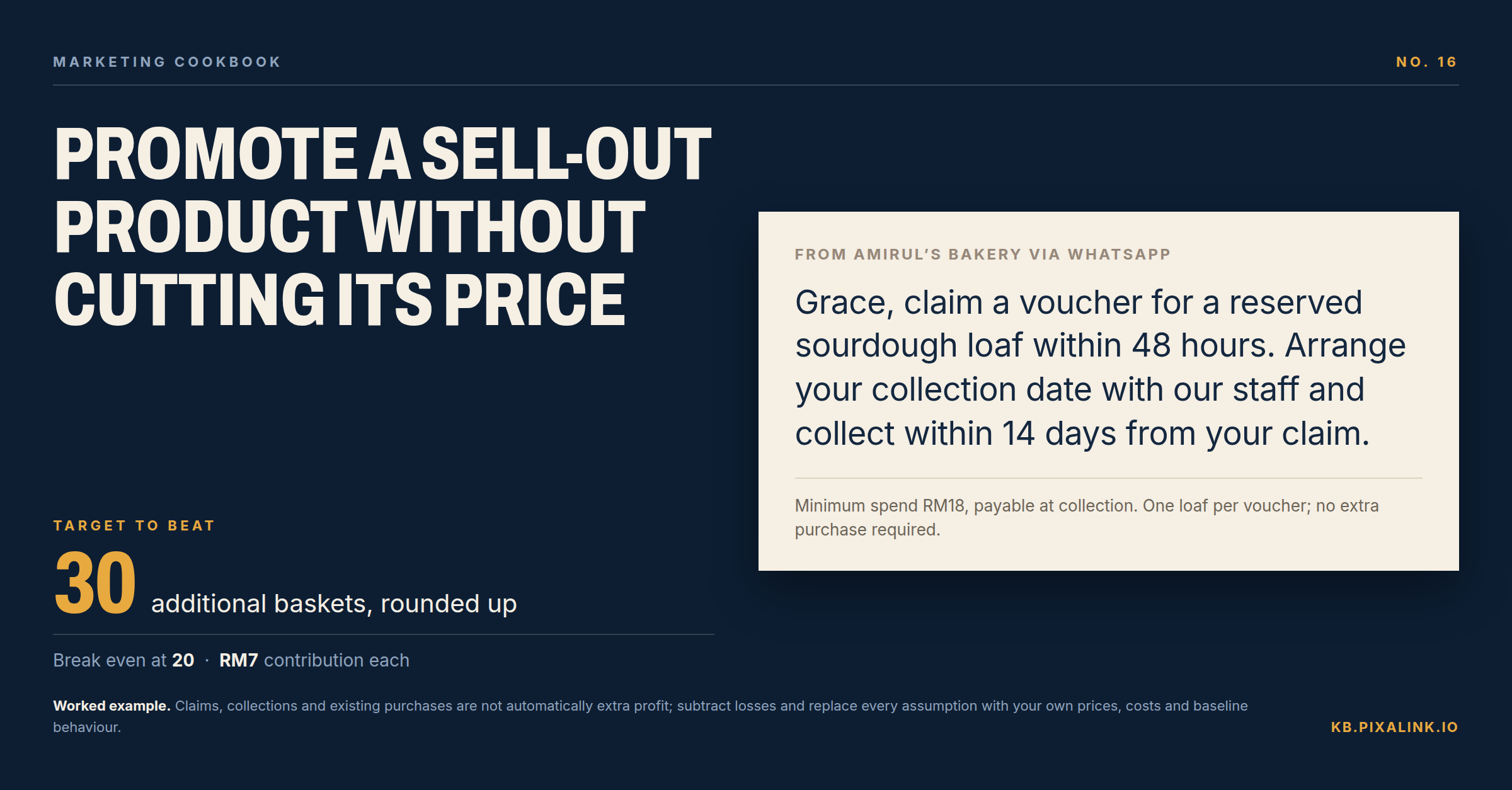
The same card at four sizes. Every figure on it comes from this article, and the message is the one written above — nothing on the card is generated.
Alt text for your post
Promote a Sell-Out Product Without Cutting Its Price. Claim one of 100 reserved-loaf vouchers within 48 hours, arrange collection with staff within 14 days from claim, and pay RM18 for the loaf. No giveaway; reward cost RM0. Claims, collections and existing purchases are not automatically extra profit; subtract losses and replace every assumption with your own prices, costs and baseline behaviour.
Closing invitation
Choose one genuinely constrained product and a cap you can honour. Run a small test like Amirul’s and measure extra customer value before repeating the offer.